Post
Immortal Monument
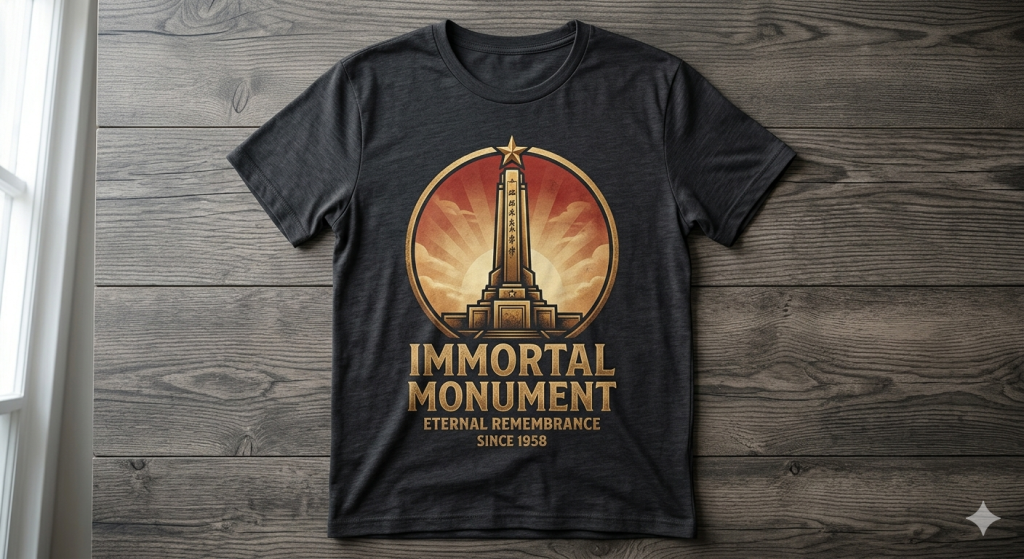
May
IMMORTAL MONUMENT
🏛️ Some monuments are made of stone. Others are made of memory. Vietnam’s immortal monuments are both — carved from ancient rock, etched into national consciousness, standing as witnesses to centuries of history. “Immortal Monument” honors the sacred sites where Vietnamese ancestors built, worshipped, fought, and left their indelible mark on the landscape.
Founded in 1070, the Temple of Literature is Vietnam’s first national university, dedicated to Confucius and honoring the nation’s scholars. For over 700 years, thousands of students studied here — memorizing classics, composing poetry, preparing for imperial examinations. Today, the temple’s stone stelae, mounted on turtle backs, record the names of doctors who succeeded in examinations — a tradition recognized by UNESCO as documentary heritage.
This design incorporates turtle motifs (representing wisdom and longevity) and stelae patterns (symbolizing enduring knowledge). The scholarly blues and aged grays evoke the temple’s tranquil courtyards, ancient trees, and contemplative atmosphere.
On Nghĩa Lĩnh Mountain in Phú Thọ province, the Hùng Temple (Đền Hùng) commemorates the Hùng Kings — the legendary founders of Vietnam. Every year on the 10th day of the third lunar month, millions of Vietnamese pilgrimage here to honor their ancestors, pray for national prosperity, and reconnect with their roots. The temple is not merely a site — it is the spiritual birthplace of the Vietnamese people.
“Immortal Monument” incorporates mountain motifs, ascending temple roofs, and incense smoke patterns — capturing the pilgrimage experience, the climb to sacred ground, and the offering of prayers.
Văn Miếu
1070Đền Hùng
Hùng KingsChùa Một Cột
One PillarKinh Thành Huế
Imperial CityĐiện Biên
Victory MonumentChùa Một Cột (One Pillar Pagoda) is Hanoi’s most distinctive temple — built on a single stone pillar rising from a lotus pond. According to legend, Emperor Lý Thái Tông dreamed of Quan Âm (Goddess of Mercy) handing him a baby on a lotus flower. When the empress soon gave birth, the emperor built the pagoda in gratitude — shaped like a lotus, rising from water, symbolizing purity.
This design incorporates lotus motifs, water reflections, and single-point balance — capturing the pagoda’s impossible elegance, its spiritual significance, and its enduring beauty.
Located on the Perfume River, the Imperial City of Huế was Vietnam’s political capital from 1802 to 1945 under the Nguyễn Dynasty. The complex includes the Citadel, the Imperial Enclosure, and the Forbidden Purple City — each layer increasing in exclusivity. Despite wartime destruction, the remaining structures still convey the grandeur of Vietnam’s last royal dynasty.
“Immortal Monument” incorporates citadel wall patterns, Ngo Mon Gate motifs, and royal colors — purples, yellows, reds — evoking imperial majesty and the bittersweet beauty of ruins.
Văn Miếu
First university
Đền Hùng
Ancestral source
One Pillar
Lotus sanctuary
Huế Imperial City
Royal grandeur
On March 13, 1954, Vietnamese forces attacked the French garrison at Điện Biên Phủ. After 56 days of brutal fighting — through mud, monsoon, and machine-gun fire — the French surrendered. The victory monument at Điện Biên commemorates this triumph, with a statue of a soldier planting the flag, symbolizing the end of colonial rule.
This design incorporates flag motifs, victory shapes, and heroic proportions — celebrating not war but the courage that ended colonial oppression and inspired liberation movements worldwide.
🇻🇳 MONUMENT EDITION — ETERNAL STONES COLLECTION 🇻🇳
Di tích là chứng nhân — Im lặng mà kể lịch sử ngàn năm.
